



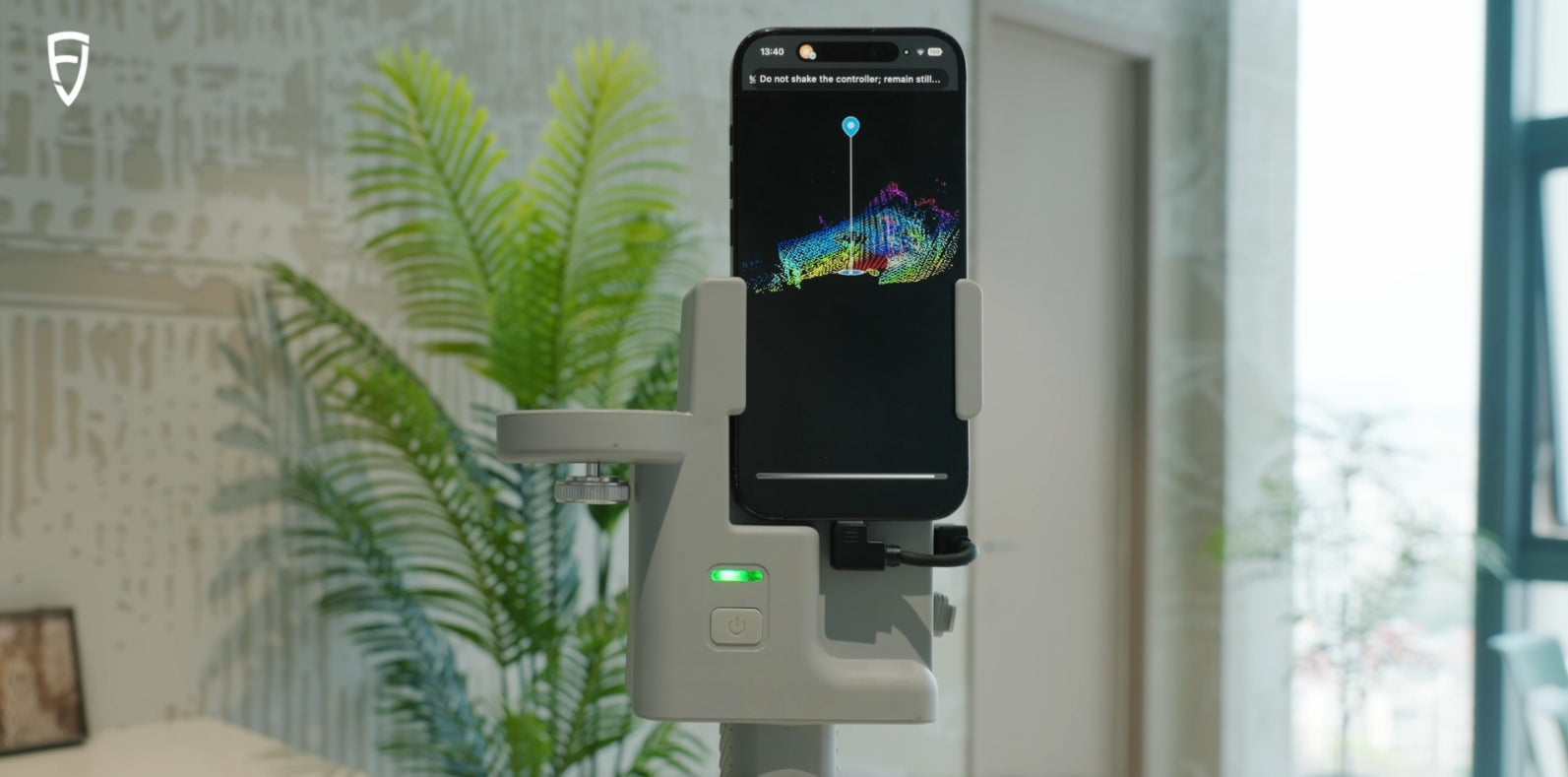
Pour les petites équipes de géomètres et les travailleurs indépendants, passer des outils traditionnels à un scanner LiDAR SLAM portable professionnel représente un investissement conséquent. Est-ce vraiment justifié, ou s'agit-il simplement d'un effet de mode technologique excessif ? Analysons les chiffres concrets, les réalités du terrain et le retour sur investissement réel du LiDAR FJD Trion V4e.
Le dilemme des petites équipes : le coût caché du « ralentissement »
Lorsque vous dirigez une petite équipe — peut-être vous-même et un ou deux techniciens de terrain — votre ressource la plus précieuse n'est pas l'équipement ; c'est… tempsLes systèmes de numérisation laser terrestre (TLS) ou les stations totales traditionnels nécessitent un nivellement précis du trépied, un placement précis de la cible et plusieurs stations, même pour une structure résidentielle standard de 5 000 pieds carrés.
Si un seul projet de numérisation 3D nécessite deux jours complets sur site, auxquels s'ajoutent deux jours de traitement manuel du nuage de points au bureau, votre équipe atteint ses limites. Vous ne pouvez plus développer votre activité, vous ne pouvez plus soumissionner pour des projets commerciaux de plus grande envergure et vos marges bénéficiaires sont grignotées par le travail manuel.
Levés topographiques traditionnels vs. LiDAR FJD Trion V4e : une comparaison directe sur le terrain
Pour comprendre le retour sur investissement (ROI) , il faut comparer les méthodes traditionnelles aux systèmes SLAM (localisation et cartographie simultanées) portables modernes, tels que… LiDAR FJD Trion V4e.
Alors que les applications de cartographie pour téléphones grand public sont limitées à une portée de 5 à 7 mètres — provoquant de graves dérives structurelles et des déformations géométriques sur les propriétés de plus de 1 500 pieds carrés — , l'architecture matérielle professionnelle du FJD Trion V4e ancre facilement les longs couloirs, les façades complexes et les espaces à plusieurs étages grâce à sa portée active de 50 mètres et à son capteur intégré.
| Métrique | Station totale traditionnelle | LiDAR FJD Trion V4e |
|---|---|---|
| Temps de capture sur le terrain (10 000 pi²) | 4 à 6 heures (Configurations et cibles multiples) | 15 à 20 minutes (Démarchage à pied) |
| Traitement des données de bureau | 3 à 5 heures (assemblage manuel des nuages) | 30 minutes (Traitement automatisé) |
| Contraintes environnementales | Nécessite une visibilité directe et un bon éclairage. | Impeccable en GPS refusé et zones sombres |
| Taille de l'équipage requise | 1 à 2 professionnels | 1 opérateur solo |
« Les données issues des déploiements sur le terrain à l'échelle mondiale montrent que la transition vers le flux de travail LiDAR FJD Trion V4e permet d'éliminer jusqu'à 70 % du temps de mesure sur site, quadruplant ainsi la capacité de projet hebdomadaire d'une petite équipe. »
Le flux de travail automatisé en 3 étapes : Du terrain à la CAO/BIM
L'un des principaux obstacles pour les petites équipes est la complexité d'apprentissage des logiciels de traitement de nuages de points. Le LiDAR FJD Trion V4e résout ce problème grâce à une architecture logicielle hautement automatisée et simplifiée. Voici comment le processus de capture des données jusqu'à leur livraison est simplifié :
- Marcher et scanner : Mettez l'appareil en marche et parcourez la structure en toute liberté. Le capteur LiDAR 905 nm indépendant et de qualité professionnelle capture 154 600 points par seconde, assurant un suivi en temps réel de la géométrie structurelle.
- Post-traitement en un clic : Importer les données brutes dans Modèle FJD Trion Le logiciel. Le moteur SLAM avancé gère automatiquement la colorisation, le débruitage et l'enregistrement du nuage de points sans nécessiter de correspondance manuelle avec la cible.
- Exportation d'écosystème sans faille : Exportation instantanée de données propres et géoréférencées LAS ou E57 Nuages de points ou mises en page vectorielles 2D automatisées. Ces fichiers sont nativement compatibles avec les logiciels AEC standard, vous permettant de générer directement les plans finaux dans AutoCAD, Autodesk Revit, et Architecte en chef sans aucun problème de compatibilité ni perte de données lors de la traduction.
Le calcul complexe du retour sur investissement : quand atteint-on le seuil de rentabilité ?
Parlons chiffres. Prenons l'exemple d'une petite équipe de géomètres ou d'un entrepreneur en rénovation qui facture en moyenne : 1 500 $ pour un dossier de documentation conforme à l'exécution d'un bien immobilier commercial ou résidentiel de taille moyenne.
- Avec les méthodes traditionnelles : Vous pouvez raisonnablement compléter 2 projets par semaine En raison des importantes tâches de préparation sur le terrain et du travail manuel fastidieux de dessin technique. Revenus hebdomadaires : 3 000 $.
- Avec le LiDAR FJD Trion V4e : Grâce à un temps de saisie sur le terrain inférieur à 30 minutes et à l'automatisation logicielle qui accélère la rédaction, votre équipe peut facilement s'adapter. 6 à 8 projets par semaine sans embaucher de personnel supplémentaire. Chiffre d'affaires hebdomadaire : plus de 9 000 $.
En récupérant 4 à 6 heures par projet, l'investissement matériel est non seulement rentabilisé, mais il atteint généralement le seuil de rentabilité dès les premières années. 4 à 5 emplois commerciauxTout ce qui est capté ensuite représente du pur profit pondéré.
Conclusion : L'investissement en vaut-il la peine ?
Si votre modèle d'entreprise repose uniquement sur des mesures précises, dans une seule pièce, où le temps est précieux, des rubans à mesurer traditionnels ou des applications mobiles basiques peuvent suffire. Cependant, si votre petite équipe de géomètres vise à gérer des aménagements commerciaux complexes, des logements collectifs, la modélisation BIM rapide à partir de scans ou des projets dans des environnements exigeants, une expertise plus poussée sera nécessaire. GPS refusé dans des environnements, un outil SLAM portable commercial comme le LiDAR FJD Trion V4e Ce n'est pas une dépense, c'est un moteur de croissance essentiel qui génère d'énormes bénéfices dès le premier jour.
Comment scanner les façades intérieure et extérieure en vue d'une extension de maison ?
Arrêtez de payer des frais au mètre carré : Scanner LiDAR FJD Trion V4e