


Il concetto di "gemello digitale" si è evoluto ben oltre le semplici forme CAD 3D e le strutture statiche. Oggi, i professionisti del settore industriale, commerciale e ingegneristico richiedono repliche virtuali immersive e in tempo reale che riproducano fedelmente il mondo reale, mantenendo al contempo un'assoluta precisione spaziale. Sebbene il 3D Gaussian Splatting (3DGS) si sia affermato come la tecnica di rendering visivo fotorealistico per eccellenza, richiede un'infrastruttura hardware robusta per trasformare un semplice progetto visivo in uno strumento di livello aziendale.
Il vero futuro della cattura avanzata della realtà risiede in un ecosistema ibrido intelligente: elevando le capacità iperrealistiche del 3D Gaussian Splatting ancorandolo allo scheletro millimetricamente preciso di SLAM LiDAR professionale portatileEcco come questa convergenza sta ridefinendo i gemelli digitali per la prossima generazione di gestione patrimoniale.
L'evoluzione del campo di radiazione e il suo anello mancante
I tradizionali gemelli digitali, costruiti su complesse mesh poligonali o modelli fotogrammetrici con texture, spesso soffrono di ritardi nel rendering, dettagli sfocati e un enorme carico computazionale. Il 3D Gaussian Splatting risolve questi problemi utilizzando milioni di gaussiane 3D morbide e continue (splat) per catturare in modo impeccabile riflessi di luce, trasparenze e texture complesse.
Tuttavia, quando la tecnologia 3DGS si basa esclusivamente su immagini passive o fotocamere di livello consumer, si trova ad affrontare un importante collo di bottiglia tecnico: deriva spaziale e mancanza di una vera scala fisicaUn motore di elaborazione intelligente può indovinare perfettamente colori e texture, ma senza un punto di riferimento hardware attivo, il modello non può verificare le distanze nel mondo reale né superare rigorose valutazioni ingegneristiche.
Come il sistema LiDAR SLAM di V4e migliora il flusso di lavoro 3DGS
Grazie all'integrazione di dati LiDAR SLAM (Simultaneous Localization and Mapping) di livello professionale nella pipeline di produzione 3DGS, l'intero flusso di lavoro di acquisizione della realtà subisce un aggiornamento intelligente.
1. Geometria istantanea in scala reale
Il LiDAR utilizza impulsi laser Time-of-Flight attivi per mappare lo spazio fisico indipendentemente dall'illuminazione ambientale. Poiché misura fisicamente le distanze reali, la nuvola di punti risultante funge da scheletro spaziale matematicamente perfetto. Quando i campi di radianza 3DGS vengono applicati sopra questa struttura LiDAR, il gemello digitale finale eredita scala reale assoluta automaticamente, consentendo agli utenti di estrarre misurazioni dimensionali precise direttamente da un browser web.
2. Eliminazione di distorsioni e artefatti visivi
I modelli di fotogrammetria puramente visiva soffrono spesso di "artefatti fluttuanti" o distorsioni geometriche quando incontrano finestre riflettenti, angoli bui o pareti bianche uniformi. SLAM LiDAR risolve attivamente questo problema fornendo un sistema di coordinate continuo e pre-allineato. Il motore intelligente 3DGS utilizza questo sistema preciso per fissare le texture visive, eliminando gli artefatti fluttuanti e garantendo contorni geometrici impeccabili.
L'ecosistema professionale FJD Trion: LiDAR V4e e scanner P2
L'esecuzione di questo flusso di lavoro ibrido altamente ottimizzato richiede hardware specializzato in grado di acquisire simultaneamente metriche spaziali e flussi visivi ad alta risoluzione. Scanner LiDAR FJD Trion V4e e le alte prestazioni FJD Trion P2 sono stati progettati appositamente per fungere da motori di aspirazione primari per questa condotta avanzata.
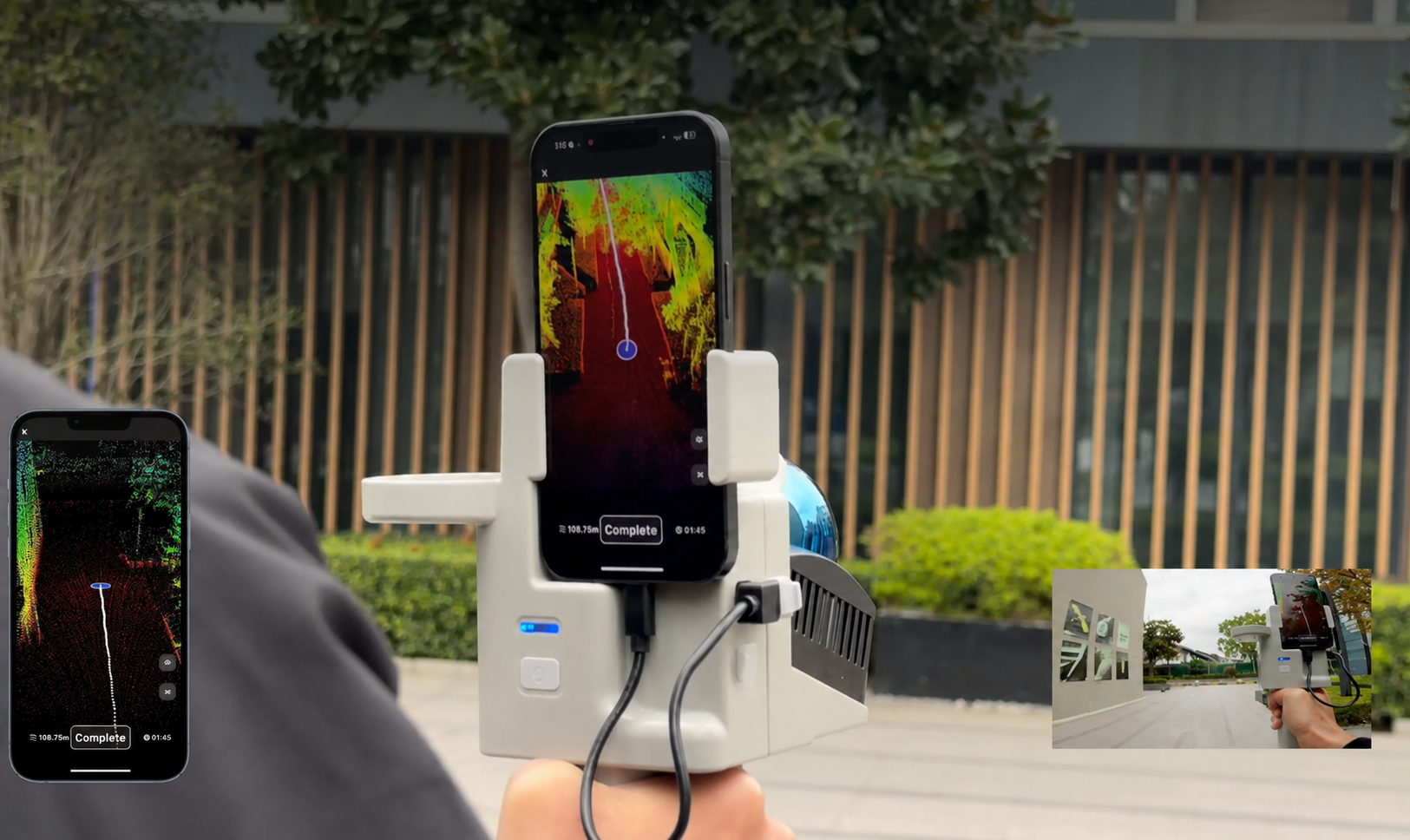
Integrità hardware: A differenza degli strumenti mobili di base per i consumatori che tentano di scansionare gli ambienti utilizzando la fotocamera nativa di uno smartphone o i sensori di profondità a corto raggio per i consumatori, Il sistema FJD Trion V4e LiDAR è dotato di un sensore LiDAR dedicato e integrato.Funziona in modo completamente indipendente da sensori esterni, garantendo una densità di punti di livello professionale, un'ampia portata e la fedeltà strutturale necessaria per i gemelli digitali industriali.
Per esigenze professionali su larga scala e ad alta densità, il FJD Trion P2 Offre prestazioni SLAM robuste e a lungo raggio, consentendo agli operatori di mappare rapidamente infrastrutture imponenti, edifici multipiano e topologie esterne complesse senza sacrificare la precisione.
Una volta completata la scansione del sito tramite una rapida ricognizione con il LiDAR V4e o lo scanner P2, i dati vengono trasferiti senza problemi nel cloud:
- I dati grezzi della scansione vengono caricati direttamente su Modello web FJD Trion piattaforma.
- Il motore cloud altamente automatizzato della piattaforma estrae la struttura rigida della nuvola di punti SLAM.
- Il sistema intelligente proietta quindi le immagini sincronizzate sull'inquadratura precisa tramite algoritmi di Gaussian Splatting 3D.
Il risultato finale è un gemello digitale straordinario, pronto per il web, che combina l'assoluta precisione di misurazione di uno scanner laser con il dettaglio fotorealistico di una cinepresa. Questo asset può essere consultato, esaminato, misurato e condiviso a livello globale tramite qualsiasi browser web standard, offrendo ai clienti aziendali vere e proprie funzionalità di gestione remota.
Domande frequenti (FAQ)
Qual è il vantaggio di combinare il LiDAR SLAM con lo Splatting Gaussiano 3D?
La combinazione di SLAM LiDAR e 3D Gaussian Splatting garantisce che il gemello digitale sia visivamente fotorealistico e strutturalmente accurato. L'hardware LiDAR definisce la geometria fisica assoluta e in scala reale, mentre il motore 3DGS fornisce texture ricche e realistiche, eliminando la deriva di scala tipica dei metodi basati esclusivamente su immagini.
È possibile utilizzare un gemello digitale 3DGS per effettuare misurazioni ingegneristiche reali?
Solo se supportato da sensori attivi di livello hardware come il LiDAR. I modelli generati esclusivamente da fotocamere standard non dispongono di coordinate fisiche di riferimento. Se ancorato a uno scanner SLAM professionale come il LiDAR FJD Trion V4e o lo scanner P2, il modello mantiene una precisione millimetrica, adatta per calcoli strutturali precisi.
Per utilizzare lo scanner LiDAR FJD Trion V4e, ho bisogno di un sensore esterno?
No. Lo scanner LiDAR FJD Trion V4e è dotato di un sensore LiDAR integrato e indipendente. Non si basa sulla fotocamera di uno smartphone né sui sensori di profondità di altri dispositivi, garantendo un'acquisizione dati affidabile e ad alta densità in qualsiasi ambiente.
Gemelli digitali 3DGS: LiDAR o fotogrammetria?
Dalla scansione sul campo all'architetto capo: planimetrie 2D in formato DXF immediate, senza costi di abbonamento.