


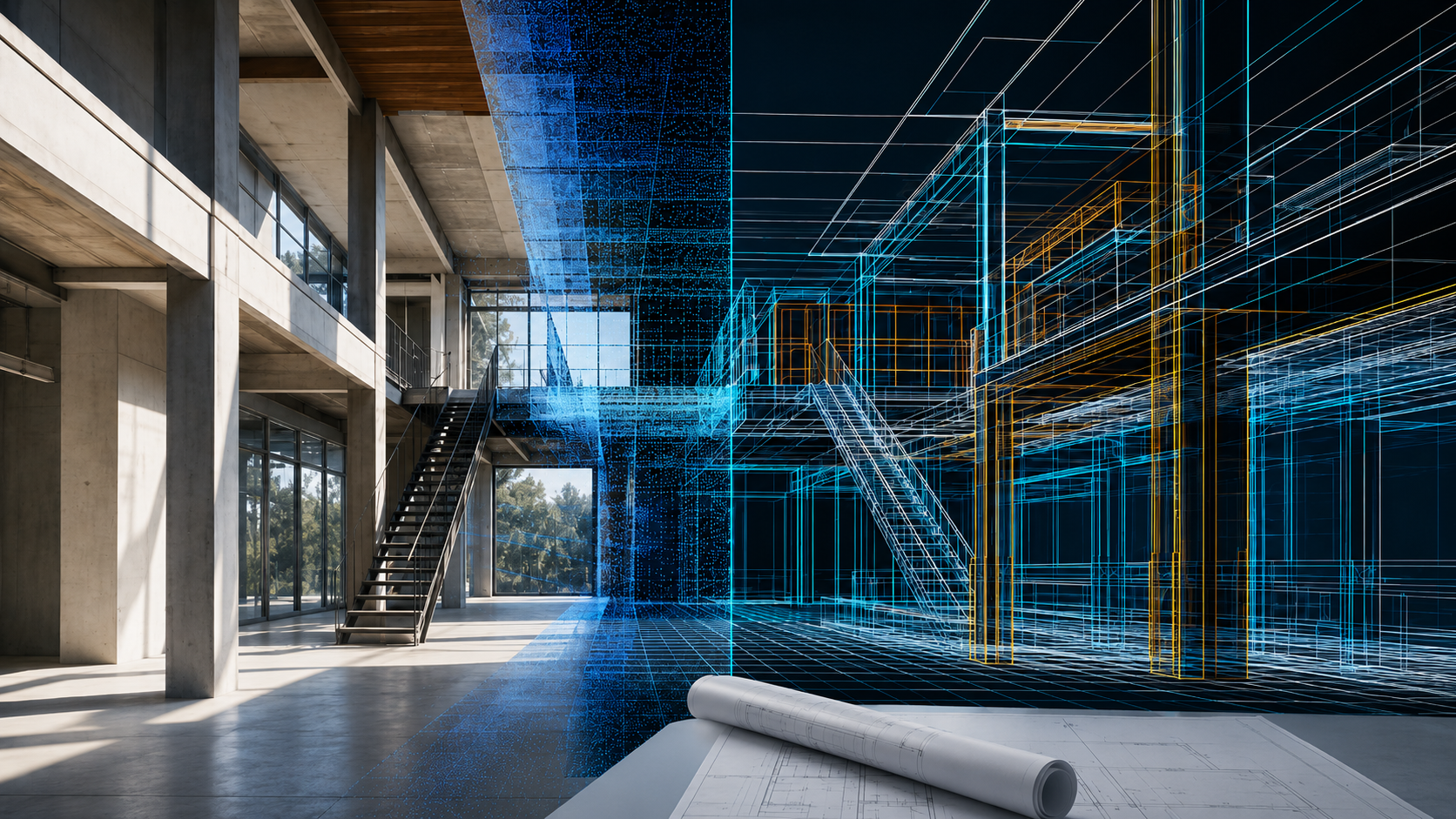
Demandez à n'importe quel entrepreneur en rénovation résidentielle ou constructeur de maisons individuelles ce qu'il déteste le plus dans le passage au scan laser 3D, et la réponse sera rarement le matériel. C'est le logiciel. Les scanners terrestres traditionnels génèrent des fichiers de nuages de points massifs et complexes qui nécessitent des connaissances informatiques pointues, des heures de recalage manuel et un logiciel de bureau lourd, ne serait-ce que pour extraire un plan de base.
Pour les PME du secteur de la conception-construction, le temps passé à manipuler des données 3D complexes est du temps perdu pour la construction proprement dite. Vous n'avez pas besoin de devenir ingénieur en nuages de points à temps plein ; vous souhaitez simplement un contour vectoriel 2D net et à l'échelle, que vous pouvez importer directement dans votre logiciel de conception. Voici comment procéder : Scanner LiDAR FJD Trion V4e et le Modèle Web FJD Trion La plateforme offre un flux de travail automatisé et ultra-rapide, du chantier directement à votre tableau de bord de dessin.
1. Contourner la barrière des logiciels complexes
La plupart des applications mobiles légères promettent des exportations rapides, mais produisent des maillages complexes et non linéaires qui ne s'alignent pas correctement lors de l'importation dans un logiciel de CAO. À l'inverse, les scanners industriels traditionnels offrent une précision extrême, mais contraignent les utilisateurs à des écosystèmes techniques restrictifs et exigeants, dont l'apprentissage est long et complexe.
FJD Trion élimine ce compromis en prenant en charge les calculs complexes en arrière-plan. Au lieu d'assembler manuellement plusieurs configurations ou de supprimer les artefacts de capteurs, les opérateurs utilisent un traitement cloud automatisé optimisé pour la haute vitesse. captation de la réalité en matière de design d'intérieur et de rénovation Le système filtre les bruits ambiants et extrait automatiquement les contours nets et précis des murs, vous permettant ainsi de vous concentrer pleinement sur la conception architecturale.
2. Le pipeline propre et rationalisé en 3 étapes
Le flux de travail est conçu spécifiquement pour les environnements de construction pratiques et rapides, en compressant un processus de dessin traditionnellement de plusieurs heures en trois actions simples et intuitives :
| Étape du flux de travail | Action de l'opérateur | Investissement en temps |
|---|---|---|
| 1. Balayer le site | Parcourez normalement la propriété résidentielle avec le Scanner LiDAR FJD Trion V4e, en surveillant la densité des données en temps réel sur l'application Trion Scan. | 10 à 15 minutes |
| 2. Traitement automatisé | Téléversez le dossier de données brutes directement sur le portail Web Trion Model hébergé dans le cloud pour un filtrage structurel intelligent. | 5 minutes |
| 3. Découper et exporter | Utilisez l'outil de découpe 2D intuitif pour sélectionner la hauteur de sol souhaitée, générant et exportant instantanément un fichier DXF propre et à l'échelle réelle. | Instantané |
Une fois le fichier DXF téléchargé, aucune conversion de fichier tierce ni mise à l'échelle manuelle n'est nécessaire. Vous pouvez glisser-déposer directement le plan vectoriel net dans Chief Architect, AutoCAD ou RevitLes murs sont déjà droits, les dimensions correspondent parfaitement aux lois de la physique et vous pouvez immédiatement commencer à ériger des murs 3D ou à dessiner les profils d'extensions structurelles. Pour simplifier encore davantage cette transition, vous pouvez explorer notre outil dédié. Flux de travail automatisé de numérisation vers CAO pour voir comment les points bruts se transforment instantanément en lignes de production prêtes à l'emploi.
3. Licences logicielles transparentes : fini les pièges du SaaS
Outre la complexité des logiciels, le secteur de la construction moderne est gangrené par des modèles de facturation SaaS abusifs. Nombre de systèmes de numérisation attirent les constructeurs avec du matériel, pour ensuite verrouiller leurs données critiques derrière des renouvellements automatiques mensuels, des frais de stockage cloud obligatoires ou des surtaxes à la numérisation qui augmentent proportionnellement au volume d'activité.
FJD Trion pratique une facturation totalement transparente, laissant le choix entièrement au contractant. Nous proposons des options d'acquisition de logiciels flexibles pour répondre à vos préférences opérationnelles :
- Option de licence d'un an : Une solution flexible et sans engagement, idéale pour les projets saisonniers ou les entreprises en pleine croissance. Aucun renouvellement automatique caché ni frais imprévus : vous l'utilisez uniquement lorsque votre activité le requiert.
- Option de licence permanente : La liberté absolue, sans abonnement. Un seul investissement vous donne un accès permanent aux moteurs de traitement et d'exportation. Vous êtes propriétaire du matériel et de vos données pour toujours, à l'abri de toute future hausse des prix des logiciels.
Conçu pour les flux de travail des bâtiments modernes
Une étude de site professionnelle ne devrait pas nécessiter un master en ingénierie des nuages de points. En remplaçant l'enregistrement manuel complexe par un traitement automatisé et accessible via le web, Scanner LiDAR FJD Trion V4e Transformez la saisie de données spatiales en un outil simplifié. Optimisez votre efficacité sur le terrain, éliminez les goulets d'étranglement dans la conception et obtenez dès aujourd'hui une visibilité financière totale sur vos coûts logiciels.
Pour les équipes d'ingénierie et de conception prêtes à passer facilement des dessins 2D à la modélisation complète des structures, consultez notre solution complète. Solutions matérielles portables de numérisation vers BIM.
Foire aux questions (FAQ)
Ai-je besoin d'un ordinateur de bureau coûteux pour traiter les données FJD Trion ?
Non. Grâce à la plateforme web Trion Model hébergée dans le cloud, le traitement des données du nuage de points ne nécessite pas un ordinateur local extrêmement puissant et coûteux pour le nettoyage des scans. Le moteur automatisé prend en charge les calculs informatiques complexes à distance, vous permettant ainsi d'accéder à des fichiers nettoyés depuis un ordinateur portable standard.
Quelle est la différence entre les options logicielles d'un an et permanentes ?
La licence d'un an offre une solution d'accès simple et sans engagement aux entreprises qui testent des flux de travail de capture de la réalité, sans aucun renouvellement automatique. La licence permanente, quant à elle, est une option sans abonnement : un achat unique vous donne un accès à vie à l'écosystème logiciel, garantissant ainsi l'absence de frais d'exploitation.
Les fichiers DXF exportés conserveront-ils les mesures réelles dans Chief Architect ?
Oui. Les coupes vectorielles 2D générées par Trion Model Web sont exportées à l'échelle réelle 1 : 1, au millimètre près. Lorsque vous importez le fichier DXF dans Chief Architect, AutoCAD ou Revit, toutes les distances spatiales, les épaisseurs de murs et les proportions des pièces s'alignent parfaitement, sans aucun ajustement manuel.
L'avenir des jumeaux numériques : optimiser les systèmes 3DGS grâce au LiDAR SLAM
Au-delà du Polycam et de la toile : pourquoi les professionnels de la rénovation optent pour le LiDAR SLAM portable