


La medición precisa de una habitación es el punto de partida de todo proyecto de diseño de interiores exitoso. Antes de crear planos, planificar el mobiliario, diseñar la iluminación o preparar los planos de reforma, los diseñadores necesitan conocer las dimensiones exactas del espacio existente.
Durante años, los diseñadores de interiores han utilizado cintas métricas, medidores láser, fotografías y notas manuscritas. Si bien estas herramientas siguen siendo útiles, los proyectos modernos suelen requerir más que simples dimensiones. Es posible que necesiten planos precisos, datos listos para CAD, modelos 3D y una referencia visual clara para comunicarse con el cliente.
Entonces, ¿cuáles son las Las mejores herramientas de medición de habitaciones para diseñadores de interioresLa respuesta depende del tipo de proyecto, del nivel de detalle requerido y de cómo se utilizarán posteriormente los datos de medición.
En este artículo compararemos tres opciones comunes: cinta métrica, medidor láser y escáner LiDARAprenderás cuándo funciona mejor cada herramienta, dónde tiene limitaciones y cuándo un escáner LiDAR se convierte en la mejor opción para los flujos de trabajo de diseño de interiores y renovación.
Por qué la medición de las habitaciones es importante en el diseño de interiores.
El diseño de interiores no se trata solo de estilo. También depende de una planificación precisa del espacio. Un pequeño error de medición puede afectar la ubicación de los muebles, los armarios, los revestimientos de paredes, la posición de la iluminación, el cálculo de materiales y los detalles constructivos.
Para habitaciones sencillas, la medición manual puede ser suficiente. Sin embargo, para casas más grandes, apartamentos, interiores comerciales o proyectos de renovación, el proceso de medición puede volverse rápidamente más complejo.
Los diseñadores de interiores a menudo necesitan capturar:
- Longitud de las paredes y altura de los techos
- Posiciones de puertas y ventanas
- Columnas, vigas, esquinas y estructuras empotradas
- Formas de las habitaciones y distribuciones irregulares
- Condiciones actuales del terreno para la renovación.
- Datos para planos de planta, dibujos CAD o modelos 3D
Por eso es importante elegir el adecuado. Herramienta de medición de habitaciones para diseño de interiores Es importante. La mejor herramienta no solo debe ayudar a medir dimensiones, sino también a adaptarse a la forma en que los diseñadores trabajan realmente.
¿Qué deben buscar los diseñadores de interiores en una herramienta de medición?
Antes de comparar diferentes herramientas, conviene definir qué necesitan normalmente los diseñadores de interiores de un flujo de trabajo de medición.
Una buena herramienta de medición debe permitir:
- Exactitud: Dimensiones fiables para la planificación y la toma de decisiones de diseño.
- Velocidad: Medición del sitio más rápida con menos pasos manuales.
- Facilidad de uso: Lo suficientemente sencillo como para usarlo durante las visitas al sitio.
- Datos completos de la habitación: Capacidad para capturar más de una o dos dimensiones
- Planos de planta: Útil para crear o comprobar diseños 2D.
- Compatibilidad con CAD: Útil para planos de diseño y flujos de trabajo de renovación.
- Visualización 3D: Útil para la comprensión espacial y las presentaciones a clientes.
No todos los proyectos requieren todas estas funciones. Para una simple revisión del mobiliario, basta con una cinta métrica. Para un levantamiento topográfico estándar de una habitación, un medidor láser puede ser suficiente. Sin embargo, cuando el proyecto requiere documentación completa de la habitación, planos o modelos 3D, un escáner LiDAR puede ser más adecuado.
Opción 1: Cinta métrica
La cinta métrica es la herramienta de medición más básica y común. Es económica, fácil de transportar y útil para realizar comprobaciones rápidas en el lugar de trabajo.
Para muchos diseñadores de interiores, una cinta métrica sigue siendo útil para medir muebles, confirmar pequeños detalles o comprobar las dimensiones durante la instalación.
Mejor para
Una cinta métrica funciona bien para:
- Habitaciones pequeñas
- Medidas simples de la pared
- Dimensiones de los muebles
- Controles rápidos in situ
- Proyectos de bajo presupuesto
- Verificación detallada durante la instalación
Si estás buscando Cómo medir una habitación con una cinta métricaEl proceso es sencillo: medir cada pared, registrar la posición de puertas y ventanas, comprobar la altura del techo y hacer un boceto simple. Para proyectos básicos, este método aún puede funcionar.
Limitaciones
La principal limitación es que la medición de habitaciones con cinta métrica es manual. Los diseñadores deben medir cada dimensión una por una, anotarlo todo y, posteriormente, recrear el espacio en un dibujo o software de diseño.
Este proceso puede volverse lento y propenso a errores cuando el espacio incluye paredes irregulares, varias habitaciones, columnas, vigas, escaleras o distribuciones comerciales. Tampoco es ideal si el objetivo es crear un plano completo, un archivo CAD o un modelo 3D.
Una cinta métrica es útil, pero no es la opción más eficiente para documentar una habitación entera.
Opción 2: Medición láser
Un medidor láser, también llamado distanciómetro láser, es una herramienta de medición digital que permite medir distancias más rápidamente que una cinta métrica. Se utiliza habitualmente para calcular la longitud, el ancho, la altura del techo, la superficie y el volumen de las habitaciones.
Para muchos diseñadores, un Medición láser para diseño de interiores Es una mejora práctica con respecto a la medición manual.
Mejor para
Un medidor láser funciona bien para:
- comprobaciones de distancia rápidas
- Medida de la altura del techo
- Largo y ancho de la habitación
- Cálculo de área y volumen
- Habitaciones estándar con líneas de visión despejadas
- Levantamientos topográficos más rápidos en comparación con la medición con cinta métrica.
Para los usuarios que comparan Medidor láser frente a cinta métricaLa mayor ventaja es la velocidad. Un medidor de distancia láser puede medir rápidamente largas distancias sin necesidad de que otra persona sostenga la cinta métrica.
Limitaciones
Un medidor láser es más rápido que una cinta métrica, pero aun así captura mediciones individuales, no la habitación completa como datos espaciales.
Por lo general, los diseñadores aún necesitan registrar medidas manualmente, tomar fotografías, hacer bocetos y elaborar planos posteriormente. En espacios irregulares, interiores complejos o proyectos de renovación, esto puede dar lugar a que se pasen por alto algunos detalles.
Un medidor láser es útil para obtener dimensiones rápidamente, pero no crea automáticamente nubes de puntos, archivos listos para CAD ni modelos 3D de habitaciones.
Opción 3: Escáner LiDAR
Un escáner LiDAR es diferente tanto de una cinta métrica como de un medidor láser. En lugar de medir una sola distancia a la vez, captura el espacio como datos espaciales digitales.
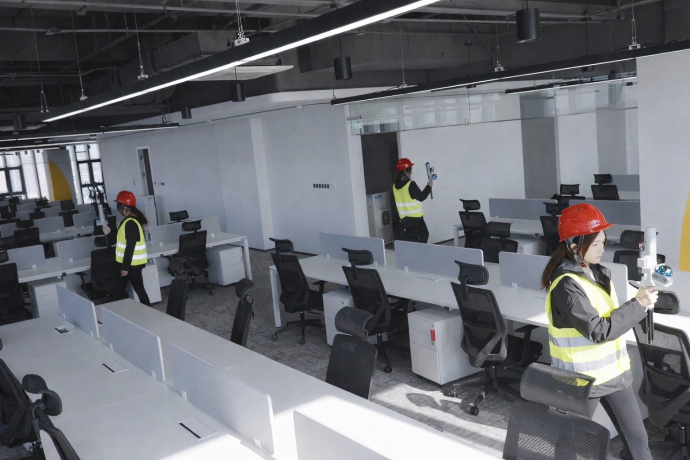
A Escáner LiDAR para diseño de interiores Puede escanear habitaciones y generar datos de nube de puntos. Esta nube de puntos puede utilizarse para crear planos de planta, flujos de trabajo CAD, modelos 3D, documentación de reformas y presentaciones de diseño.
Mejor para
Un escáner LiDAR funciona bien para:
- Captura de habitación completa
- Casas y apartamentos grandes
- interiores comerciales
- Proyectos de renovación de oficinas
- Espacios irregulares o complejos
- Documentación tal como se construyó
- Generación de planos de planta
- Flujos de trabajo de nube de puntos a CAD
- Flujos de trabajo desde el escaneo de habitaciones hasta el modelado 3D
- presentaciones a clientes
Para diseñadores que buscan un Escáner 3D para habitaciones en diseño de interiores o un escáner de planos de plantaLa tecnología LiDAR ofrece un flujo de trabajo más completo que las herramientas de medición básicas.
Limitaciones
Un escáner LiDAR suele tener un coste inicial más elevado que una cinta métrica o un medidor láser. Además, requiere un flujo de trabajo digital para procesar los datos escaneados, crear planos o exportar archivos CAD y modelos 3D.
Para tareas muy sencillas, como medir una mesa o comprobar la longitud de una pared, un escáner LiDAR puede ser más que suficiente. Pero para proyectos que requieren datos completos de una habitación, puede ahorrar tiempo y facilitar un flujo de trabajo más profesional.
Cinta métrica vs. medidor láser vs. escáner LiDAR
Aquí hay una comparación simple de los tres más comunes Herramientas de medición de habitaciones para diseñadores de interiores.
| Herramienta | Lo mejor para | Ventaja principal | Limitación |
|---|---|---|---|
| Cinta métrica | Cuadros pequeños, muebles, dimensiones sencillas | De bajo costo y fácil de usar. | Lento y manual para la medición de toda la habitación. |
| Medición láser | Comprobaciones rápidas de distancia, altura, área y volumen. | Más rápido que una cinta métrica | Captura mediciones individuales, no datos espaciales completos. |
| Escáner LiDAR | Escaneo de habitaciones completas, planos de planta, nubes de puntos y modelos 3D. | Captura digitalmente espacios interiores completos. | Requiere flujo de trabajo de software y una mayor inversión. |
Al comparar cinta métrica frente a medidor láser, la medición láser suele ser más rápida para comprobaciones de distancia. Al comparar Medición láser frente a escáner LiDARLa diferencia es mayor: una medición láser captura dimensiones individuales, mientras que un escáner LiDAR captura la habitación como datos espaciales digitales.
Para proyectos sencillos, las cintas métricas y los medidores láser siguen siendo útiles. Sin embargo, para los flujos de trabajo de diseño de interiores modernos que requieren planos, archivos CAD y visualización 3D, el escaneo LiDAR proporciona datos más completos.
¿Qué herramienta deberían elegir los diseñadores de interiores?
La mejor herramienta depende del trabajo.
Elija una cinta métrica si
Solo necesitas medidas sencillas, dimensiones de los muebles o comprobaciones rápidas de detalles. Una cinta métrica también resulta útil como herramienta de apoyo durante la instalación o la verificación del sitio.
Elija un medidor láser si
Necesitas una medición de distancia más rápida para habitaciones estándar. Un medidor láser es una buena opción para medir la longitud de las paredes, la altura de los techos y la superficie de las habitaciones cuando no necesitas datos 3D completos.
Elija un escáner LiDAR Si
Necesitas escanear toda la habitación, crear planos, preparar datos para CAD, construir modelos 3D o documentar las condiciones existentes para una renovación. Un escáner LiDAR también es más adecuado cuando el espacio es grande, complejo o difícil de medir manualmente.
Para los diseñadores de interiores que trabajan con frecuencia en proyectos de renovación, un escáner LiDAR puede ayudar a reducir el trabajo de medición manual y proporcionar una referencia digital más completa.
Cuando LiDAR se convierte en la mejor opción
A escáner LiDAR se convierte Resulta especialmente útil cuando los datos de medición deben respaldar algo más que un simple boceto.
Considere la posibilidad de utilizar el escaneo LiDAR cuando su proyecto incluya:
- Apartamentos o casas con varias habitaciones
- Renovación de interiores de oficinas y locales comerciales
- Edificios antiguos con distribuciones irregulares
- Espacios con columnas, vigas, escaleras o esquinas complejas.
- Proyectos que requieren planos de planta precisos
- Flujos de trabajo que involucran la conversión de nube de puntos a CAD
- Creación de modelos 3D a partir de escaneos de habitaciones
- Diseñar presentaciones para clientes
- Documentación finalizada para equipos de renovación
En estos casos, un escáner de habitaciones para diseño de interiores Puede ayudar a recopilar datos más completos del sitio y facilitar la gestión del proceso de diseño.
En lugar de depender únicamente de notas manuales y fotografías, los diseñadores pueden escanear la habitación, revisar la nube de puntos, crear planos de planta y utilizar los datos para flujos de trabajo de CAD o modelado 3D.
Cómo FJD Trion facilita la medición en el diseño de interiores
Los escáneres LiDAR FJD Trion están diseñados para ayudar a los profesionales a capturar espacios reales y convertirlos en datos digitales útiles. Para los diseñadores de interiores y los equipos de reforma, esto se traduce en un flujo de trabajo más eficiente, desde la medición del sitio hasta los planos, las referencias CAD, los modelos 3D y las presentaciones para clientes.
Dependiendo del proyecto, los distintos escáneres FJD Trion pueden satisfacer diferentes necesidades:
- LiDAR FJD Trion V4e: Adecuado para el escaneo diario de interiores, la medición de habitaciones, los flujos de trabajo de renovación y la creación de planos.
- Escáner 3D FJD Trion P1: Un escáner 3D portátil y ligero para la documentación rápida de obras, el escaneo de interiores, la creación de planos y la integración con software de diseño.
- Escáner LiDAR portátil FJD Trion P2: Diseñado para mapeo 3D profesional, proyectos de mayor envergadura, flujos de trabajo relacionados con BIM y datos de nube de puntos más detallados.
Para los diseñadores que necesitan algo más que una herramienta de medición básica, los escáneres LiDAR FJD Trion ofrecen una forma práctica de capturar espacios interiores y convertir los escaneos de habitaciones en datos listos para el diseño.
Consideraciones finales: Elija la herramienta que mejor se adapte a su flujo de trabajo.
No existe una única herramienta de medición que sea la mejor para todos los proyectos de diseño de interiores.
Una cinta métrica es sencilla, económica y útil para mediciones rápidas. Un medidor láser es más rápido para medir distancias, alturas, áreas y volúmenes. Un escáner LiDAR es la mejor opción cuando los diseñadores necesitan datos completos de habitaciones, planos, archivos CAD, modelos 3D o documentación de reformas.
Para los diseñadores de interiores, la elección correcta depende de cómo se vayan a utilizar los datos de medición. Si solo se necesitan una o dos dimensiones, una cinta métrica o un medidor láser pueden ser suficientes. Si el flujo de trabajo requiere la captura de la habitación completa, nubes de puntos, planos y modelos 3D, un escáner LiDAR puede ofrecer una solución más completa.
Descubra los escáneres LiDAR FJD Trion para el diseño y la renovación de interiores, y convierta espacios reales en planos precisos, datos listos para CAD y modelos 3D.
Preguntas más frecuentes
¿Cuál es la mejor herramienta para medir habitaciones para los diseñadores de interiores?
La mejor herramienta para medir espacios para diseñadores de interiores depende del proyecto. Una cinta métrica es útil para pequeñas comprobaciones, un medidor láser es más rápido para medir distancias y un escáner LiDAR es mejor para la captura de espacios completos, planos, flujos de trabajo CAD y modelos 3D.
¿Es mejor un medidor láser que una cinta métrica para el diseño de interiores?
Un medidor láser suele ser más rápido que una cinta métrica para medir el largo, el ancho, la altura, el área y el volumen de una habitación. Sin embargo, aún registra mediciones individuales en lugar de los datos completos de la habitación.
¿Es mejor un escáner LiDAR que un medidor láser?
Un escáner LiDAR es mejor cuando se necesitan datos espaciales completos, nubes de puntos, planos, archivos listos para CAD o modelos 3D. Un medidor láser es mejor para comprobaciones rápidas de distancia y mediciones sencillas de habitaciones.
¿Puedo crear un plano de planta a partir de las medidas de las habitaciones?
Sí. Se puede crear un plano a partir de mediciones manuales, pero a menudo requiere dibujar y comprobar las dimensiones a mano. Con un escáner LiDAR, se puede escanear la habitación y usar los datos de la nube de puntos para crear planos de forma más eficiente.
¿Cuándo deberían los diseñadores de interiores utilizar un escáner LiDAR?
Los diseñadores de interiores deberían considerar el uso de un escáner LiDAR cuando trabajen en espacios grandes, diseños complejos, proyectos de renovación, interiores comerciales o cualquier proyecto que requiera planos de planta, archivos CAD, modelos 3D o documentación precisa del estado de la obra.
Escáner LiDAR para diseño de interiores: Cómo capturar habitaciones, planos y modelos 3D más rápido
Cómo el escaneo 3D ayuda a reducir las correcciones en proyectos de diseño de interiores