



Introduction: What is RTK Technology and Why Does It Matter?
RTK (Real-Time Kinematic) technology is a breakthrough in the field of high-precision positioning. It enables centimeter-level accuracy, making it a critical tool for industries such as surveying, construction, architecture, and agriculture. RTK achieves this level of precision by using GNSS (Global Navigation Satellite Systems) signals, providing real-time corrections to GPS data, thus ensuring that measurements are as accurate as possible.
But how does this relate to smartphones? Can a smartphone be used with an RTK handheld receiver to improve precision and performance? The answer is yes, and this article will delve into how RTK handheld receivers can be integrated with smartphones to enhance accuracy in various industries, while also making high-precision data collection more accessible and cost-effective.
How RTK Handheld Receivers Work
RTK handheld receivers are devices that allow users to capture geospatial data with high accuracy. These receivers work by receiving signals from multiple GNSS satellites. The data from these satellites is then processed by the RTK receiver to provide real-time position corrections, allowing users to capture precise coordinates for mapping, surveying, and other applications.
RTK handheld receivers are typically used in combination with a base station or a reference station that broadcasts correction data. This ensures the positioning is accurate to within a few centimeters, even in complex environments where traditional GPS-based systems may struggle.
Integrating RTK Handheld Receiver with Smartphones
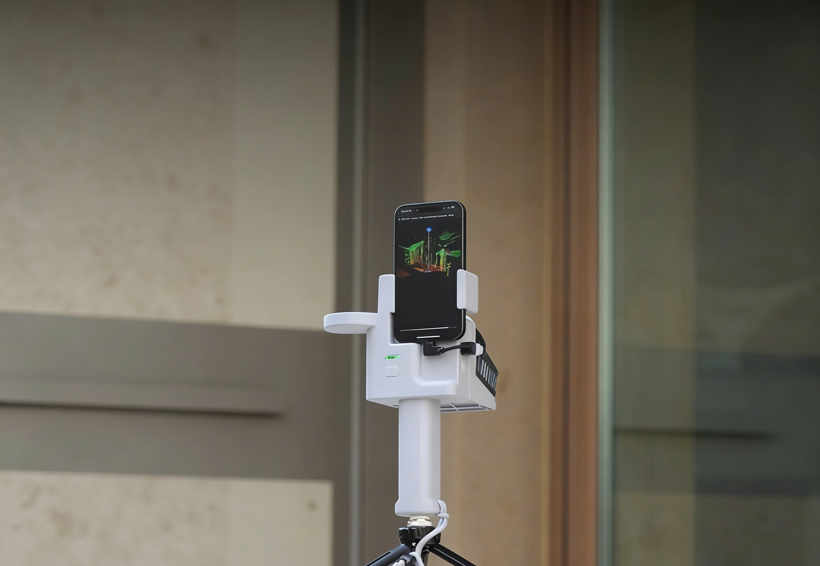
Modern smartphones are equipped with powerful processors, sensors, and connectivity options such as Bluetooth and Wi-Fi. These capabilities make smartphones an ideal companion for RTK handheld receivers. By connecting the RTK receiver to a smartphone, users can visualize the collected data in real-time and receive immediate feedback on their measurements.
For instance, RTK handheld receivers like the FJD Trion V4e Scan and FJD Trion V4e Pro can be paired with smartphones to streamline data collection and visualization. Using a dedicated mobile app, users can control the RTK receiver, monitor accuracy, and visualize point cloud data directly on their smartphone screen.
The integration of smartphones with RTK receivers offers several key advantages, including portability, ease of use, and cost efficiency. Let's explore these advantages in more detail.
Advantages of Using RTK Handheld Receivers with Smartphones
1. Portability and Convenience
One of the biggest advantages of using an RTK handheld receiver with a smartphone is the portability it offers. Traditional RTK systems often require bulky equipment and additional devices. In contrast, combining a smartphone with a compact RTK receiver like the V4e Scan or V4e Pro results in a lightweight and portable solution. Users can easily carry these devices into the field, making them perfect for outdoor applications such as surveying and construction.
2. Real-Time Data Processing and Visualization
Smartphones provide the processing power necessary to quickly analyze and visualize data collected by the RTK receiver. This real-time feedback helps professionals make adjustments on the spot, ensuring that the data is accurate and actionable. With an intuitive mobile app, users can see georeferenced data instantly, enhancing workflow efficiency and reducing the need for post-processing.
3. Cost-Effectiveness
RTK systems can be expensive, especially when you need to purchase dedicated equipment and software. However, by using smartphones as the main interface, the overall cost of the RTK solution can be significantly reduced. Smartphones are already widely available, and most people are familiar with their usage. This makes the combination of an RTK receiver with a smartphone an affordable and practical solution for both small-scale and large-scale operations.
4. Enhanced Accuracy
While smartphones alone cannot provide RTK-level accuracy, the combination of an RTK handheld receiver and a smartphone results in a highly accurate system. Devices like the FJD Trion V4e Scan and FJD Trion V4e Pro leverage RTK technology to provide centimeter-level precision. By connecting these receivers to a smartphone, users can receive real-time corrections and visualize data with exceptional accuracy.
Real-World Applications of RTK Handheld Receivers with Smartphones
1. Surveying and Mapping
Surveyors rely on precise measurements to map land boundaries, create topographic maps, and document site details. The integration of RTK technology with smartphones makes this process much more efficient. By using the V4e Scan or V4e Pro alongside a smartphone, surveyors can quickly collect accurate geospatial data and visualize their findings on the spot. This real-time feedback allows them to make immediate corrections, ensuring data quality.
2. Construction and Site Planning
In construction, accurate measurements are essential for planning and building. RTK technology helps ensure that all measurements are precise, from the foundation layout to the final touches. By using smartphones with RTK handheld receivers, construction professionals can efficiently manage large-scale projects, improving the accuracy of site layouts, boundary delineations, and structure placements.
3. Agriculture and Environmental Monitoring
In agriculture, precision is key to improving crop yields and managing farmland. RTK handheld receivers paired with smartphones can provide accurate data on soil health, irrigation levels, and crop growth. This integration can help farmers make data-driven decisions and optimize their operations. Similarly, environmental scientists can use this technology for monitoring wildlife habitats, tracking environmental changes, and conducting field surveys.
4. Geospatial Data Collection for GIS
Geospatial data is essential for geographic information systems (GIS) applications. Using RTK handheld receivers with smartphones, GIS professionals can easily capture and record accurate location-based data. This can be used for mapping roads, utilities, and public infrastructure projects. With real-time visualization on smartphones, GIS professionals can immediately verify the accuracy of their data, streamlining the data collection process.
Challenges of Using RTK Handheld Receivers with Smartphones
1. Battery Life
One challenge when using smartphones with RTK receivers is battery consumption. RTK data collection, along with the use of smartphone apps, can drain the battery quickly. To mitigate this, users may need to carry external power banks or ensure that their smartphones are fully charged before starting a long fieldwork session.
2. Environmental Interference
RTK technology is highly dependent on clear satellite signals. In environments with tall buildings, dense forests, or harsh weather conditions, signal interference can affect the accuracy of the RTK system. While smartphones can help visualize data, they cannot mitigate environmental factors that may impact signal quality.
3. Compatibility and Connectivity Issues
Not all smartphones are compatible with RTK receivers, especially older models. Additionally, the mobile apps required to connect the RTK receiver to the smartphone must be optimized for the device's operating system. It’s essential to ensure that both the smartphone and RTK receiver are compatible with the necessary apps for seamless data collection.
Choosing the Right RTK Handheld Receiver and Smartphone Combination
When selecting an RTK handheld receiver and smartphone for your projects, it's important to consider the specific requirements of your work. If you need a lightweight and portable solution for general mapping or surveying tasks, the FJD Trion V4e or V4e Scan models are excellent choices. These devices are designed for easy use with smartphones and offer reliable RTK accuracy.
FJD Trion V4e: A compact and versatile RTK receiver suitable for a wide range of applications.
FJD Trion V4e Scan: Ideal for scanning tasks with enhanced scanning features for precise data collection.
Conclusion: The Future of RTK Technology with Smartphones
As RTK technology continues to evolve, the integration with smartphones will become more common in various industries. By combining the power of smartphones with RTK handheld receivers, professionals can achieve high-precision data collection in a compact and cost-effective package. Whether you're a surveyor, construction professional, or GIS expert, using RTK handheld receivers with smartphones can streamline your workflow, improve accuracy, and reduce costs.
With products like the FJD Trion V4e Scan and FJD Trion V4e Pro, the future of RTK technology is brighter than ever, offering professionals a reliable solution for their high-precision data collection needs.
How RTK LiDAR Accuracy Enhances Precision in Surveying, Construction
Turning Your iPhone into a Professional Grade Portable LiDAR Scanner