



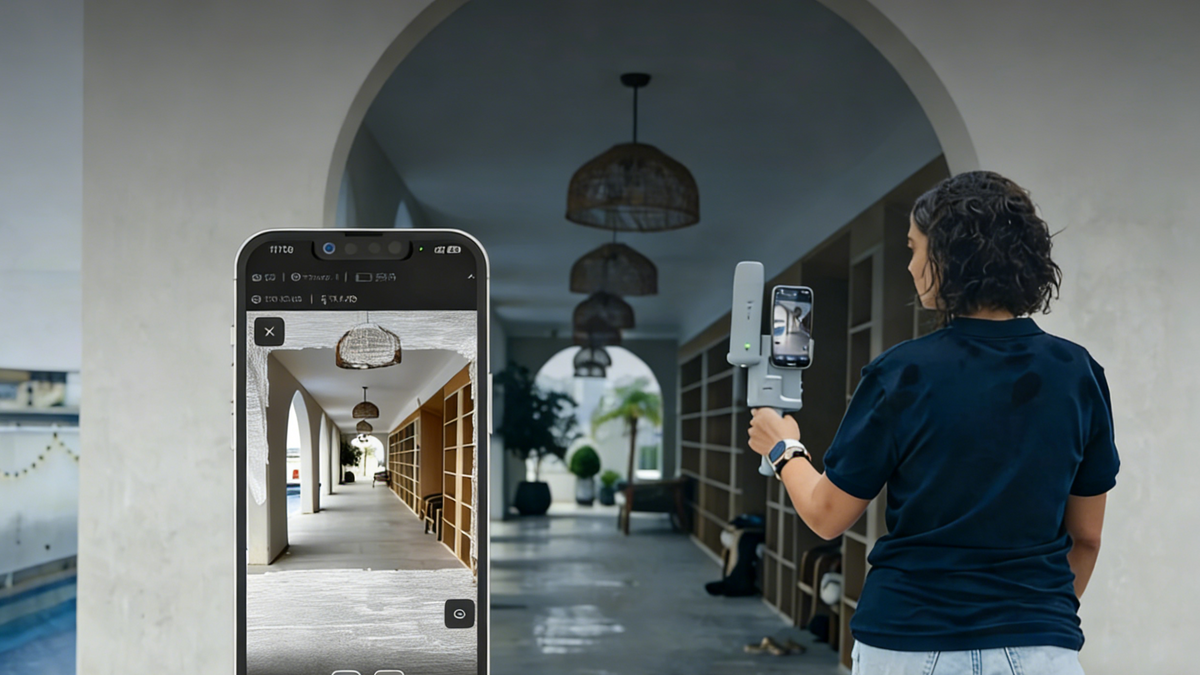
Surveying technology has evolved significantly over the past few decades. Traditional surveying methods that once relied heavily on manual measurement tools are now being complemented by advanced digital technologies. One of the most transformative innovations in the field is SLAM surveying, which uses LiDAR scanners and mobile mapping systems to capture spatial data rapidly and efficiently.
As industries such as construction, architecture, infrastructure inspection, and urban planning demand faster and more accurate data collection, professionals increasingly compare SLAM surveying vs traditional survey methods to determine which approach is better suited for modern projects.
Understanding the differences between these two surveying approaches can help engineers, surveyors, and even individual users choose the right surveying technology for their needs. This article explores how SLAM surveying works, how it compares to traditional survey methods, and the advantages and limitations of both techniques.
What Is SLAM Surveying?
SLAM surveying refers to surveying methods that use Simultaneous Localization and Mapping technology to capture spatial information while moving through an environment. SLAM algorithms allow a LiDAR scanner to determine its position in real time while simultaneously generating a map of the surrounding environment.
Modern handheld LiDAR scanners equipped with SLAM technology are capable of capturing millions of spatial data points per second. These measurements form detailed point cloud models that represent buildings, terrain, infrastructure, and other objects in three-dimensional space.
Unlike traditional surveying tools that require fixed measurement stations, SLAM surveying allows users to walk through a site while continuously collecting spatial data. This significantly improves efficiency and reduces the time required to complete surveying projects.
Handheld LiDAR scanners and mobile mapping systems are commonly used for SLAM surveying in applications such as building measurement, digital twin creation, construction documentation, and indoor mapping.
What Are Traditional Survey Methods?
Traditional survey methods rely on established tools and techniques used by surveyors for many years. These methods typically involve equipment such as total stations, GPS receivers, levels, and measuring tapes.
Surveyors using traditional survey methods collect measurements point by point. Each measurement must be carefully recorded, and multiple measurement stations are often required to capture a complete representation of a site.
Traditional surveying techniques are still widely used in many industries because they provide reliable results and are well understood by professionals.
However, traditional surveying often requires more time and labor compared to modern LiDAR scanning methods. Surveyors may need to manually measure many individual points to generate a complete survey map.
SLAM Surveying vs Traditional Survey Methods: Key Differences
Understanding the differences between SLAM surveying and traditional survey methods helps highlight why LiDAR scanning technology is gaining popularity.
The most noticeable difference is how spatial data is collected.
Traditional survey methods measure individual points across a site. Surveyors must move equipment between positions and manually capture each measurement.
SLAM surveying, on the other hand, collects millions of points continuously as the operator moves through the environment with a handheld LiDAR scanner.
This difference dramatically improves speed and efficiency.
SLAM surveying can often complete mapping tasks in minutes that might take hours or days using traditional surveying equipment.
Another major difference is the type of output produced.
Traditional surveying typically produces coordinate points and basic survey maps. SLAM surveying generates high-density point cloud data that can be converted into detailed 3D models and digital twins.
Accuracy Comparison: SLAM Surveying vs Traditional Survey Methods
Accuracy is one of the most important considerations when choosing a surveying technique.
Traditional survey methods are known for producing highly accurate measurements, especially when using high-precision instruments such as total stations and GNSS receivers. These tools are capable of achieving millimeter-level accuracy in certain applications.
However, SLAM surveying using modern handheld LiDAR scanners can also achieve impressive accuracy levels. In many real-world applications, LiDAR surveying can reach accuracy levels between 2 and 5 centimeters.
For projects such as building measurement, construction monitoring, and facility documentation, this level of accuracy is often more than sufficient.
The advantage of SLAM surveying is that it combines acceptable accuracy with dramatically improved speed and efficiency.
For many surveying tasks, the ability to quickly capture a complete point cloud model outweighs the need for extremely precise point measurements.
Speed and Efficiency of SLAM Surveying
One of the biggest advantages of SLAM surveying is its speed.
Traditional survey methods often require surveyors to set up equipment at multiple locations across a site. Each setup requires calibration, positioning, and careful measurement.
SLAM surveying eliminates many of these steps. A handheld LiDAR scanner can collect spatial data continuously while the operator walks through the environment.
Large buildings, warehouses, and construction sites can often be scanned within minutes.
Mobile mapping systems equipped with LiDAR technology also allow surveyors to capture large areas efficiently. This makes SLAM surveying particularly useful for projects that require rapid data collection.
Advantages of SLAM Surveying with LiDAR Scanners
SLAM surveying offers several important advantages compared with traditional surveying methods.
First, SLAM surveying significantly improves productivity. Because LiDAR scanners capture millions of points automatically, surveyors can complete projects much faster.
Second, handheld LiDAR scanners allow users to capture spatial data in complex environments. Indoor spaces, narrow corridors, and construction sites can be scanned easily using mobile mapping technology.
Third, SLAM surveying produces highly detailed point cloud data. This data can be used to generate accurate 3D models for architecture, engineering, and construction projects.
Another benefit is the accessibility of modern LiDAR scanners. Many professionals and individuals now search online for LiDAR scanners for sale when upgrading their surveying tools.
A professional LiDAR scanner store often provides various handheld LiDAR scanners and mobile mapping systems designed for efficient surveying workflows.
Limitations of SLAM Surveying
Although SLAM surveying offers many advantages, it also has some limitations.
SLAM algorithms rely on environmental features to track movement. Environments with very few distinguishable features may reduce mapping accuracy.
Highly reflective surfaces such as mirrors or glass walls may also affect LiDAR scanning results.
In addition, extremely high precision surveying tasks may still require traditional surveying equipment.
For example, projects involving boundary surveys or engineering control networks may demand higher accuracy levels than SLAM systems typically provide.
For this reason, many professionals use SLAM surveying together with traditional surveying tools to achieve optimal results.
Advantages of Traditional Survey Methods
Traditional surveying techniques continue to play an important role in many industries.
One major advantage is their ability to achieve extremely high measurement precision. Instruments such as total stations and RTK GNSS receivers are capable of delivering very accurate coordinate measurements.
Traditional surveying equipment is also widely accepted in regulatory and legal surveying tasks. Property boundary surveys and infrastructure layout projects often require traditional measurement methods.
Additionally, many surveyors have extensive experience with traditional survey equipment and workflows.
These methods remain essential for certain applications where precise control points and regulatory compliance are required.
Choosing Between SLAM Surveying and Traditional Survey Methods
Choosing the right surveying method depends on the specific requirements of a project.
If speed, efficiency, and detailed 3D modeling are priorities, SLAM surveying using handheld LiDAR scanners is often the preferred choice.
Projects such as building documentation, construction monitoring, indoor mapping, and digital twin creation benefit greatly from LiDAR scanning technology.
On the other hand, projects requiring extremely precise coordinate measurements may still rely on traditional surveying methods.
Many professionals combine both approaches to maximize efficiency and accuracy.
For example, a surveyor may use traditional surveying tools to establish control points and then use SLAM LiDAR scanning to capture detailed spatial data across the site.
Modern LiDAR Scanners for SLAM Surveying
The growing popularity of SLAM surveying has led to the development of advanced handheld LiDAR scanners and mobile mapping systems.
These devices integrate LiDAR sensors, motion tracking algorithms, and powerful data processing software to capture accurate spatial data quickly.
Professionals looking to upgrade their surveying workflow often explore modern LiDAR scanners available through specialized LiDAR scanner stores.
Many of these systems are designed to be portable, easy to operate, and capable of producing high-quality point cloud models suitable for construction, architecture, and infrastructure inspection.
For users interested in exploring LiDAR surveying technology, visiting a professional LiDAR scanner store can help identify handheld LiDAR scanners and mobile mapping systems that meet specific surveying needs.
The Future of Surveying Technology
Surveying technology continues to evolve rapidly. Advances in LiDAR sensors, computing power, and SLAM algorithms are making spatial data collection faster and more accessible.
Handheld LiDAR scanners are becoming more compact, affordable, and powerful. This allows engineers, architects, and even individual users to perform LiDAR surveying tasks that previously required specialized equipment.
As demand for digital twins, smart cities, and infrastructure monitoring grows, SLAM surveying will likely become an essential tool in the surveying industry.
Traditional surveying methods will continue to play an important role, but LiDAR scanning technology is expanding the possibilities of modern surveying workflows.
Conclusion
The comparison between SLAM surveying vs traditional survey methods highlights how modern LiDAR technology is transforming spatial data collection.
Traditional surveying methods provide extremely precise measurements and remain essential for certain applications. However, SLAM surveying using handheld LiDAR scanners offers remarkable advantages in speed, efficiency, and the ability to capture detailed 3D point cloud models.
For many modern surveying projects, the combination of LiDAR scanning and mobile mapping systems provides an ideal balance between accuracy and productivity.
As more professionals search for LiDAR scanners for sale and explore new surveying technologies, SLAM surveying is expected to become a key component of future surveying workflows.
How Accurate is LiDAR Surveying?
Affordable Professional LiDAR: Breaking Down the FJD Trion V4e Price vs. Performance